
Sewing Kit RFQs: Reconcile the Component Count
Visible contents identify questions for the schedule; covered items and inclusion quantities still need confirmation.
A sewing kit RFQ should ask for a named contents schedule and an explanation of how the headline piece count is calculated. Keep individual needles, thread spools, grouped accessories, holders and the case distinguishable. Link the schedule to the offered kit revision. A display showing accessories both inside and beside a case must not be counted as though every pictured occurrence is an additional supplied item.
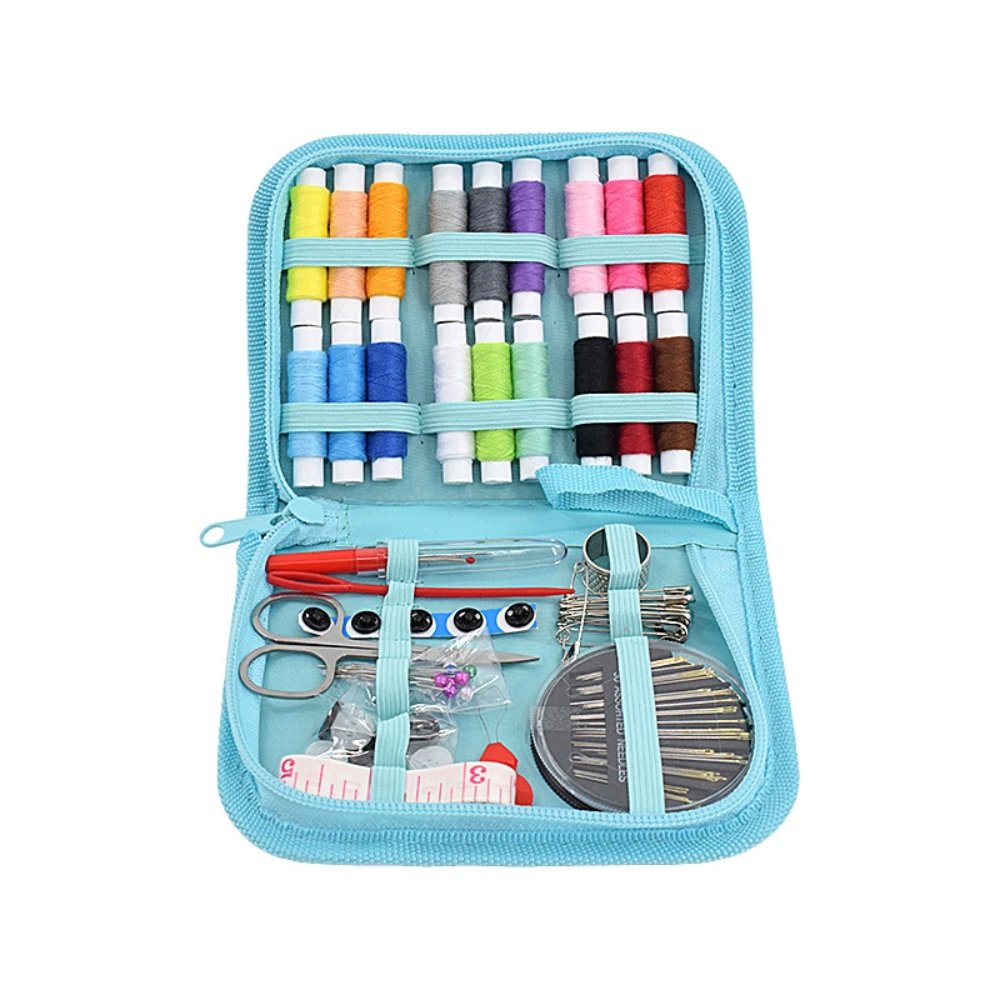
Kangrui lists an 86-Piece Multi-Function Sewing Kit, Gross. Its gallery includes an open blue case and layouts with tools and thread outside the case. These references identify the catalogue offer but do not replace a supplier-confirmed contents list. For a retailer preparing an order or product description, the practical question is what one purchased kit actually includes and how those members are counted.
Use the catalogue name as an identifier, not the inventory
Give the supplier the exact product reference and identify the photograph used in the enquiry. Ask which current kit version is being offered. Retain the catalogue name in the reference field, while keeping the supplier-confirmed contents on separate lines. Do not turn the name into an independently inspected total or assume that a similarly named kit elsewhere has the same members.
The pictured case contains visible thread spools and a lower tool area, while other views arrange components around the case. Ask the supplier whether these are alternate presentations of one kit. Where a component is partly covered, keep its identity as a question rather than completing the list from a generic sewing checklist. A familiar tool category is not proof that a particular item is included in this offer.
Define what counts as one member
Use one schedule line for each named component group and state the counting unit for that line. Needles in a round holder, separate pins and a strip of small fasteners raise different counting questions. Ask whether a displayed holder is counted separately from its contents and whether a group is described as one pack or as individual members. Preserve the supplier explanation beside the quantity.
Apply the same discipline to thread. A spool count identifies physical spools; it does not establish the length wound on them, their fibre composition or the number of approved colours. If those fields matter, request them separately for the actual offer. Do not infer a thread amount from the visible thickness of a spool or use the colour assortment as an unstated quantity convention.
The outside layout must not automatically be counted in addition to similar members shown inside the case.
Identify one exact offered kit and schedule revision.
Keep individual members, groups and containers distinguishable.
Do not count repeated catalogue presentations as additional supply.
Reconcile repeated displays and packaging members
Match the open-case view to the outside layout using the supplier component identifiers. The gallery can show the same category in more than one position to explain the product. Do not add a tool visible inside the case to an outside display count without confirmation that they represent different supplied members. Keep any uncertainty visible in the schedule until the supplier answers it.
Ask explicitly whether the case, needle holder and any smaller container contribute to the stated count. A closed case in a presentation photograph does not establish another complete kit behind it. Similarly, a loose accessory beside the case may be a display example rather than an extra. These questions concern the commercial scope; they do not establish a packing format or confirm the contents of a future delivery.
Contents field
Question for the supplier
Scope of the answer
Thread spools
How many physical spools are included?
Not a thread length or composition claim
Needles and pins
Individual count or a grouped pack?
State the counting convention
Holders and case
Included, and counted separately?
Avoid an unexplained headline total
Repeated display
Same members or extra supplied items?
Relate each image to the offer schedule
Connect the returned list to the offer revision
Review the returned schedule alongside the quotation for one complete kit. Check that its component names, quantities and units explain the offered scope without unexplained additions. If a supplier proposes a different colour assortment or a substitute tool, keep that proposal separate from the requested version. The buyer should be able to identify which schedule was accepted, which was rejected and which still needs clarification.
For a later physical sample, record the identity of the sample and compare its observed contents against the accepted schedule. Retain discrepancies as specific entries with photographs where useful. This record does not inspect an unseen shipment, certify tool quality or establish suitability for a user. It provides a clear commercial reference from which sample review, packing identification and any separate product requirements can proceed.
Ask whether the case and grouped holders contribute to the offered count; this image is not a verified inventory.
Frequently Asked Questions
Does the catalogue piece count replace a contents schedule?
No. Use it as a reference and ask how the offered count is constructed from named components.
Should tools inside and outside the case be added together?
Only where the supplier confirms that they are separate supplied members. A display can repeat items for presentation.
Does counting spools establish the supplied thread length?
No. Spool count and thread amount are separate fields requiring their own confirmation.
Can this worksheet confirm a future shipment?
It defines the accepted offer. An actual sample or delivery needs its own identity and observed contents record.
Use the listed sewing kit as the enquiry reference. Read the Kangrui blog and contact the supplier with the contents schedule and unresolved counting fields.
#ThreadKits #ComponentSchedule #PieceCount #WholesaleRFQ #B2BProcurement