
Button Tab Orders: Specify the Pack Quantity
How should a wholesale button-tab order define its quantity? State whether the quotation is per individual tab, pair, pack or another defined selling unit, then request the number and colour allocation inside that unit. Ask the supplier to identify the packing level to which each count applies. A photograph showing several tabs does not establish the contractual pack quantity or the contents included in a price.
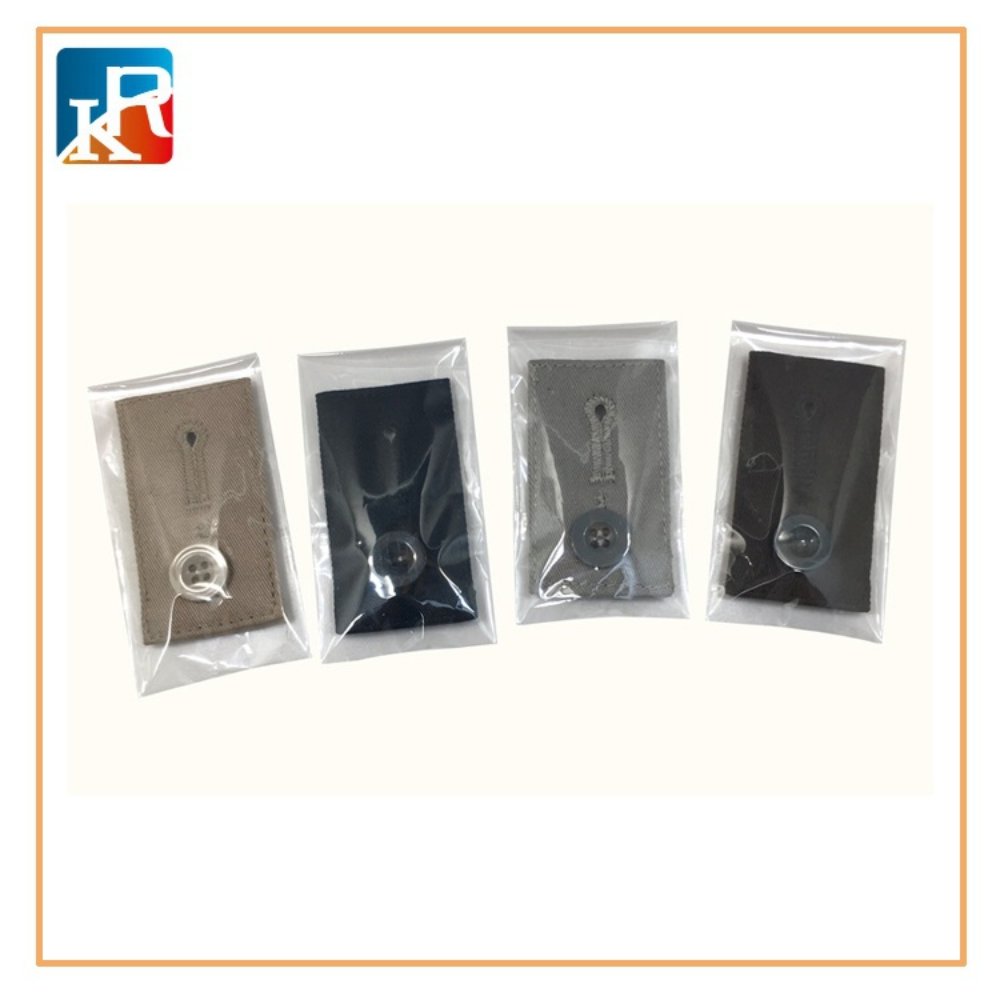
Official sleeved display only. The number pictured is not confirmation of the offered pack quantity or sale unit.
Treat catalogue arrangements as references, not order units
Kangrui’s Jeans Adjustable Button page identifies the accessory and named colour options. The reviewed listing does not define a quotation pack quantity or a compulsory assortment. Official images show different arrangements, including individually sleeved tabs, a two-tab presentation and a row of colour references.
Use those photos to identify the enquiry and explain the packing question. Do not infer that the number visible in an arrangement equals the number supplied in a quoted pack. A catalogue scene can display alternatives, sample pieces or packaging references without defining a selling unit.
For a garment-accessory buyer, this clarification makes price comparison and order entry more reliable. The task is separate from approving the colour reference, confirming garment-interface dimensions or requesting material declarations. It asks what quantity the supplier is actually offering for the stated price unit.
Buying field
Requested supplier response
Quotation unit
An individual tab, pair, defined pack or other supplier-identified sale unit.
Pieces inside that unit
Exact number of tabs included in the proposed quotation unit.
Colour allocation
Whether the unit is a single colour or an explicitly agreed mix.
Inner packing
Proposed sleeve, bag, card or other packing reference and the count it contains.
Outer packing
How inner units are grouped and how that count links to the order quantity.
Order wording
Product reference, sale unit, unit count and packing scope stated consistently across the offer.
Ask what the price unit contains
Request a written definition alongside the supplier price. If the offer uses a pair or pack description, ask exactly what is counted. The response should say whether it concerns complete tabs or another identified component group, rather than leaving the buyer to guess from a photo of two pieces.
Keep the number of sale units distinct from the number of individual tabs. An order line can state both where that helps receiving, provided the relationship is clear and agreed. Do not change the supplier’s unit wording during comparison without recording how the quantities have been interpreted.
When comparing offers, first confirm that they refer to equivalent unit contents. A price for an individual tab and a price for a multi-tab unit answer different questions. This guide does not provide a price, minimum quantity or calculation presented as an actual supplier quotation.
Official two-tab presentation. Ask whether the quotation is per tab, pair, pack or another explicitly defined unit.
Define the colour mix inside each offered unit
The supplier lists named colour options, but a colour list does not establish a mandatory mixed pack. Ask whether the proposed unit contains a selected colour, a buyer-agreed mix or another stated allocation. Retain the exact colour references rather than treating every photographed combination as an available assortment.
A colour-appearance approval remains useful, but it does not answer the quantity question. A buyer can approve the appearance of a reference and separately request the amount assigned to that reference. Keep both decisions visible so the supplier knows which mix is being quoted and which sample supports it.
If the buyer requests a mixed allocation, ask the supplier to confirm the proposed counts and packing arrangement. Do not invent an even split, a fixed ratio or stock availability. The offer should show what the supplier has actually agreed to provide, including any allocation still awaiting confirmation.
Map inner packing to the outer order quantity
The official sleeved display gives a useful starting point for a packing discussion. Ask whether that sleeve presentation is offered for the order and what its scope would be. A visible sleeve is not confirmation that individual packing, a retail label or a display card is included in the quotation.
For each proposed packing level, record the number of tabs or sale units it contains. Ask how those units are grouped into the next level and how the outer count relates to the purchase-order line. A shared unit map helps avoid mixing individual-piece counts with pack or carton counts.
If a label or packing list carries the quantity, ask which unit its number describes. The label text, supplier offer and order record should use compatible definitions. A packing change should not silently alter the amount supplied in a sale unit or the way the receiving team interprets the outer count.
Official component appearance reference. Confirm piece count and packaging scope in the supplier offer rather than counting objects in this photo.
Release one consistent quantity description
Retain the accepted unit definition, colour allocation and packing schedule with the offered product reference. Before release, compare the supplier offer with the purchase-order wording and any approved packing reference. Identify an unresolved difference rather than allowing each document to imply a different quantity basis.
Where the supplier changes a packing arrangement, ask whether the sale unit and individual-tab count remain the same. Record the answer and identify the applicable version. This keeps a presentation revision from becoming an unnoticed quantity change between the approved sample and the order.
Receiving staff should be able to tell what to count and which packing level a document describes. If the delivered arrangement differs from the agreed reference, retain the observation and request an identified response. The aim is a clear purchasing definition, without claiming that a catalogue image guarantees the shipment contents.
Buyer FAQ
Do four sleeved tabs in a photo mean a four-tab pack?
No. Ask the supplier to define the offered sale unit and its contents in writing.
Does a two-tab image confirm that the item is sold as a pair?
No. The picture is an appearance reference until the supplier confirms a pair-based quotation.
Are all pictured colours automatically supplied together?
No. Request the proposed single-colour or mixed allocation for the actual order.
Is individual packing included because a sleeve is visible?
Not necessarily. Confirm the offered packing scope and what the quotation includes.
What should the purchase-order line retain?
The product reference, selling unit, individual-tab relationship, colour allocation and applicable packing schedule.
Use the actual Jeans Adjustable Button catalogue reference and request the supplier information for your offered version. The Kangrui purchasing blog covers related sample and quotation questions.
Define the quotation unit before comparing prices.
Confirm pieces and colours inside the unit.
Link inner packing and outer counts to the order.
wholesale garment accessoriesB2B supplier sample record