
Kit Thread RFQs: Define Length per Spool
How should a buyer specify the thread supplied on sewing-kit spools? Request a declared thread length and unit for each identified spool or clearly defined spool group. Ask which colours and kit version the declaration covers, and obtain the supplier measurement basis. Keep the thread amount separate from the number of spools and the weight of the complete kit. A photograph of a full-looking spool does not establish its thread length.
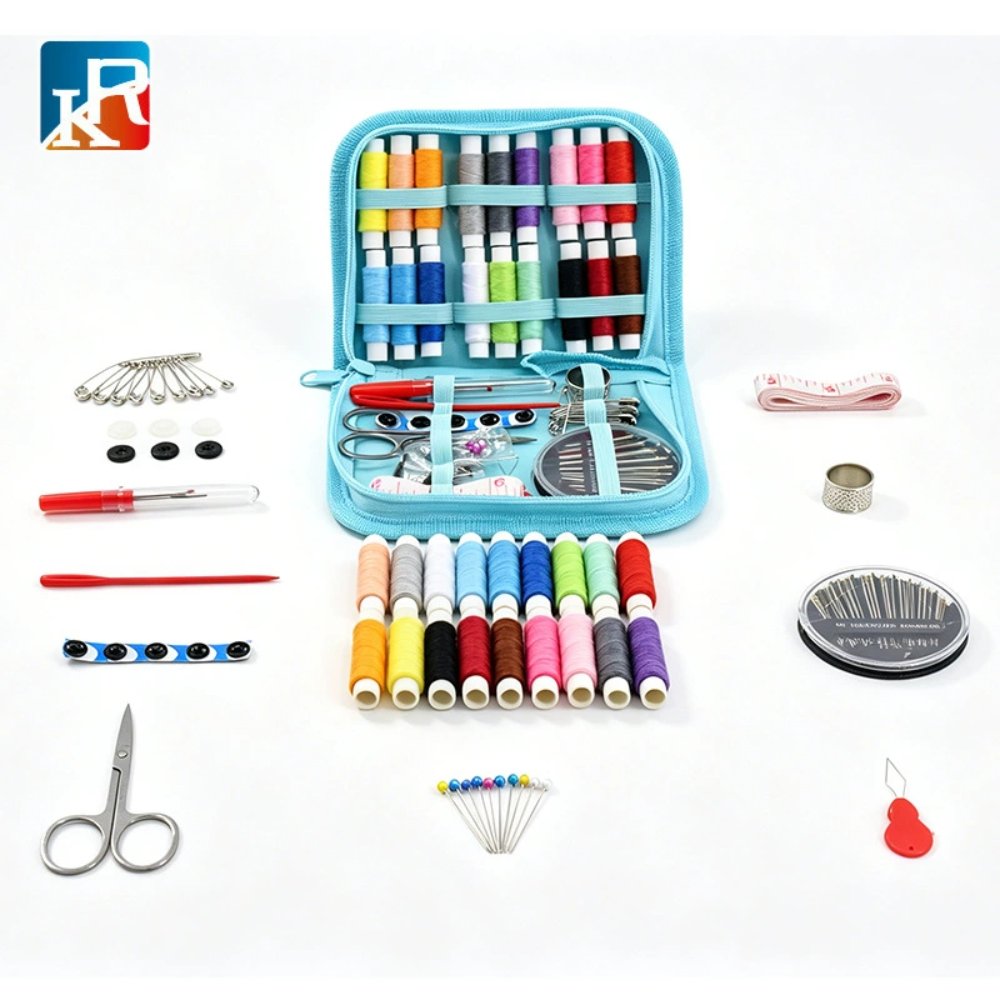
Official catalogue layout showing loose spools and an open kit. The scene identifies the thread references but does not establish length per spool or extra supplied contents.
Identify the thread quantity being quoted
Kangrui Household lists an 86-Piece Multi-Function Sewing Kit, Gross. The saved product page declares a weight of 135 g and the gallery shows coloured thread spools both in an open case and in a loose display. Those references identify the catalogue kit. They do not publish the length of thread supplied on each spool.
For wholesale thread kits, a purchasing team needs to know what its thread-amount comparison represents. Two proposals can identify a similar number of visible spools while leaving the amount wound on each one unspecified. Ask for a per-spool declaration instead of treating the overall kit name as a complete thread specification.
Begin with the offered kit version and supplier spool reference. If the supplier describes several groups, keep each group identifiable. A commercial description such as assorted thread is useful context, but it does not state whether the same amount is proposed for every member or colour in the assortment.
Buying field
Requested supplier response
Kit identity
Exact offered kit and contents-schedule revision.
Spool identity
Supplier reference or a clearly identified group of equivalent proposed spools.
Thread amount
Declared length per spool with its stated unit.
Applicability
Which colours and supplied members the declaration covers.
Measurement basis
Supplier explanation or applicable record supporting the declared quantity.
Review scope
Any agreed sample quantity check, with method and decision recorded separately.
Keep spool count and thread length in separate columns
The number of physical spools answers how many spool members are included. Length per spool answers how much thread is proposed on an identified member. Put these in different fields so the supplier can respond without mixing the two quantities.
Do not infer length from the diameter of a wound spool in a photograph. The image does not provide the underlying winding, core or thread information needed to establish that quantity. A visually fuller spool is not a confirmed longer-length offer, and different catalogue arrangements are not separate measurements.
When the supplier returns an assortment schedule, ask whether one declaration applies to every identified spool or whether particular members differ. Keep an unanswered row visible rather than assuming that a value given for one colour covers the complete kit. The schedule should explain its own scope.
Official closed-case display with loose thread references. Spool appearance and the overall kit-weight declaration do not establish thread length.
Request units and a clear declaration basis
Ask the supplier to state the length unit explicitly and identify whether its value describes one spool or another named quantity. Preserve the original declaration beside any buyer comparison field. A number with no unit or quantity basis is not ready for a consistent commercial comparison.
If offers use different units, confirm the underlying meaning before preparing a common comparison. Keep the supplier value and the buyer conversion distinguishable. This article supplies no product length value and does not create a number from the published complete-kit weight.
Ask what supplier specification or measurement record supports the declared amount for the actual proposed spool. The response should identify its product or group applicability. A general thread document for a different offer does not automatically establish the amount included in this kit.
Do not derive thread length from the kit weight
The listing has a 135 g weight entry, but that field is not a per-spool thread-length declaration. The kit also contains a case and other pictured tool categories. Ask the supplier to define any weight field needed for the buying brief independently of the thread-amount schedule.
Even a separately supplied spool weight would answer a different question unless the relevant scope and thread information were established. Do not create a precise length by dividing a broad kit-weight value or by assigning an assumed mass to the case and accessories.
Keep thread quantity separate from material identity and use suitability as well. A declared length does not establish fibre composition, thread thickness, strength or compatibility with a particular machine. If those properties matter to the proposed order, request their own product-specific information.
Official open-case reference from the same kit listing. Confirm the offered thread specification separately from the visible spool count.
Agree any sample check before using it for acceptance
Where the buyer needs to check a sample quantity, agree the relevant method and scope with the supplier before drawing an acceptance conclusion. Identify the sample spool and the declared value being reviewed. Record the actual observation together with the method used.
No universal length tolerance or sampling plan is specified by the inspected page. Any numerical requirement belongs in a separately agreed purchasing specification. Keep a supplier declaration distinct from a buyer observation, especially when only part of an assortment has been reviewed.
If the supplier changes a spool proposal or substitutes a thread member, ask which quantity declarations are affected. Retain the revised schedule with the kit and spool references. A similar colour assortment or unchanged headline piece count does not make the revised thread amount an automatic match.
Make the quantity schedule useful for the next order
Keep the accepted per-spool values, units, applicability explanation and supplier response with the quotation. The person comparing prices should be able to identify which amount each offer represents. A clear quantity schedule supports comparison without claiming that one offer has been physically measured when it has only been described.
For a later enquiry, cite the accepted kit and thread references and ask whether the same declaration still applies. Record an alternative as a new proposal where its quantity changes. This preserves a usable buying reference without turning the catalogue display into a guarantee about a future shipment.
Buyer FAQ
Does an 86-piece name specify thread length?
No. It identifies the catalogue offer. Request the thread amount per identified spool separately from the physical component count.
Can spool fullness establish how much thread is included?
No measured length follows from the image. Request the supplier declaration and its applicable basis.
Does the 135 g kit entry give a length per spool?
No. Keep overall kit weight and thread length as different quantities with separately confirmed scopes.
Should one colour value be copied to the whole assortment?
Only where the supplier confirms that the declaration covers those identified members. Keep any exceptions explicit.
Does a quantity decision establish sewing suitability?
No. Material, thickness and machine-related questions need their own applicable information.
Identify the offer through the official sewing-kit listing, request a per-spool quantity schedule, and see the Kangrui purchasing blog for related product questions.
Name the kit and proposed spool references.
Keep thread length, units and applicability together.
Separate declared quantity from an actual sample observation.
wholesale thread kitsB2B supplier sample record